
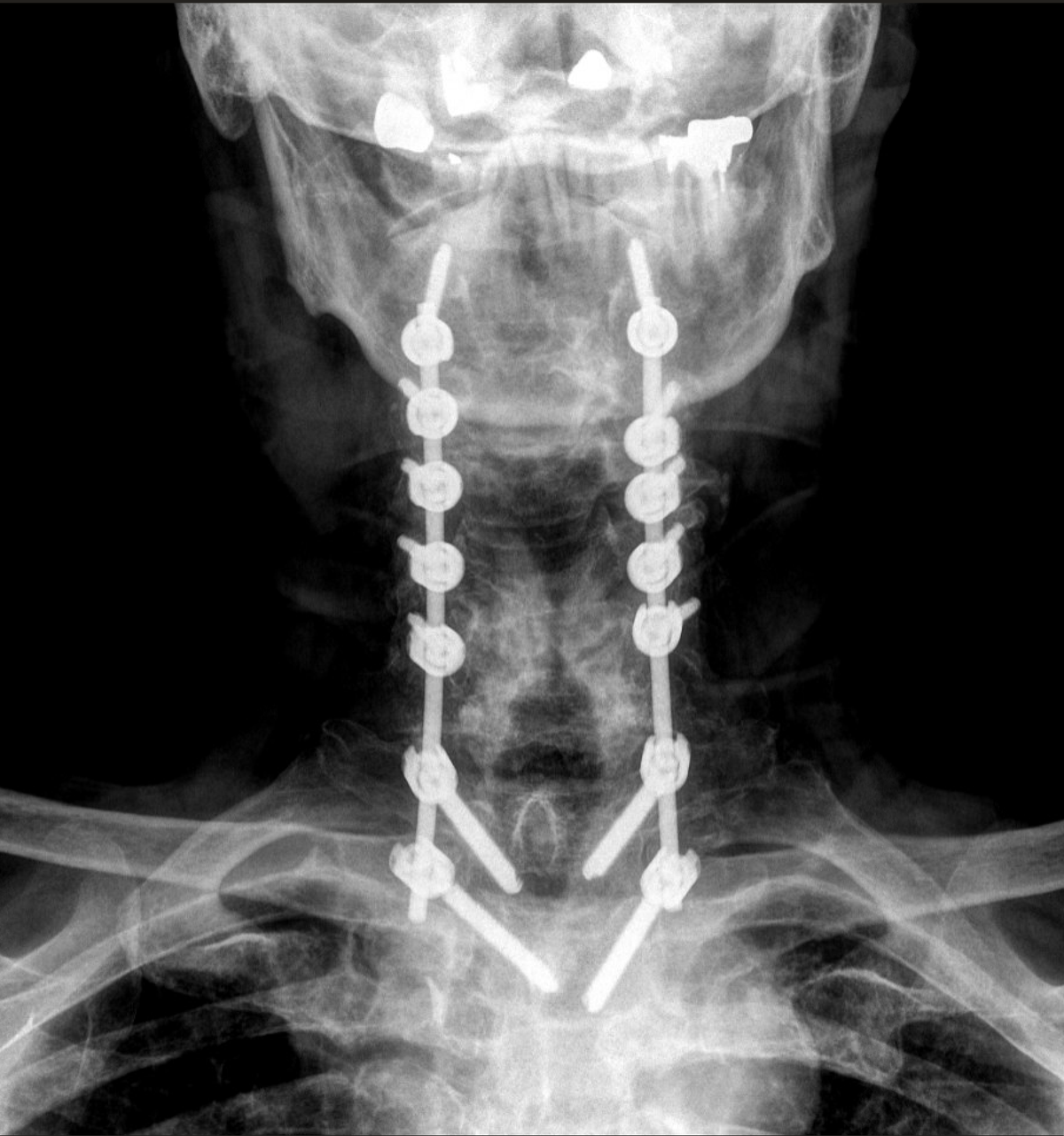
Cervical Laminectomy & Fusion in Los Angeles
Orthopedic Spine Surgeon — Long Beach & Torrance, CA
Medically reviewed by Brandon A. Ortega, MD · Last updated September 14, 2026
Cervical laminectomy and fusion is a surgical treatment for multilevel cervical spinal stenosis, spinal cord compression, myelopathy, instability, and selected cervical deformities. The procedure combines a wide decompression of the spinal cord with stabilization of the cervical spine using screws and rods. Dr. Brandon Ortega performs posterior cervical laminectomy and fusion in Los Angeles for patients who require multilevel decompression when stabilization is also necessary.
3+ Levels
multilevel spinal cord decompression
2-3
night hospital stay
6-12 Wks
average return to full activity
What Is Cervical Laminectomy & Fusion?
Cervical laminectomy and fusion is a posterior cervical spine procedure designed to decompress the spinal cord and stabilize the cervical spine. During the procedure, the lamina—the bone forming the back of the spinal canal—is removed across the affected levels. Removing the lamina creates additional space for the spinal cord and relieves compression caused by cervical stenosis. The treated vertebrae are then stabilized using screws and rods. Bone graft is placed along the posterior cervical spine to allow the vertebrae to gradually fuse together into a stable construct. This accomplishes two important goals:
Decompression: creating more space for the spinal cord and nerves.
Stabilization: preventing abnormal motion and maintaining appropriate spinal alignment.
Who Is a Candidate?
Cervical laminectomy and fusion may be appropriate for patients with: • Multilevel cervical spinal stenosis • Cervical spondylotic myelopathy • Congenital cervical stenosis • Ossification of the posterior longitudinal ligament (OPLL) • Cervical instability/deformity • Previous cervical surgery requiring posterior reconstruction
Levels Treated
Posterior cervical laminectomy and fusion is particularly useful when disease involves three or more cervical levels, although the number of levels treated depends on the individual patient's anatomy. A typical reconstruction may involve levels between C3 and C7, but the fusion can extend higher or lower when necessary.
The Instrumentation
After the spinal cord is decompressed, screws are placed into the cervical vertebrae and connected with rods. The instrumentation provides immediate structural stability while bone graft gradually forms a biological fusion between the vertebrae. Modern spinal navigation and intraoperative imaging may be used when appropriate to assist with accurate instrumentation placement.
The Fusion
Bone graft is placed along the prepared surfaces of the posterior cervical spine. Over the following months, new bone gradually forms between the vertebrae, creating a solid fusion. The instrumentation provides stability during this healing process.
Benefits
Why Choose Cervical Laminectomy & Fusion?
For appropriately selected patients, cervical laminectomy and fusion provides extensive spinal cord decompression while simultaneously stabilizing the cervical spine.
Multilevel Spinal Cord Decompression
The posterior approach allows several cervical levels to be decompressed during a single procedure. This makes it particularly useful for extensive cervical spinal stenosis and multilevel myelopathy.
Immediate Stabilization
Screws and rods provide structural stability immediately after decompression. This can be important when preexisting instability is present or when decompression itself could compromise stability.
Maintains Cervical Alignment
Fusion can help maintain appropriate cervical alignment after multilevel decompression and reduce the risk of progressive post-laminectomy deformity.
Treats Complex Pathology
Posterior cervical fusion can address pathology that may not be adequately treated through a single anterior approach, particularly when spinal cord compression extends across multiple levels.
Addresses Instability
When abnormal motion, instability, deformity, or significant degenerative change is present, fusion provides stability that a decompression-only procedure cannot.
Durable Reconstruction
Once fusion has matured, the treated levels form a stable structural unit designed to provide long-term support following spinal cord decompression.
Laminectomy/Fusion vs. Laminoplasty
Cervical Laminectomy & Fusion vs. Cervical Laminoplasty
Both procedures are designed to decompress the spinal cord across multiple cervical levels. The defining difference is whether the treated levels are stabilized with fusion or remain mobile.
Cervical Laminectomy & Fusion
✓ Extensive multilevel spinal cord decompression ✓ Provides immediate stabilization ✓ Appropriate for cervical instability ✓ Helps maintain or control cervical alignment ✓ Can address selected deformities ✓ Useful for complex or revision cervical surgery – Eliminates motion across the fused levels – Requires bone fusion – Risk of pseudarthrosis – Longer biological healing process – May increase stress on adjacent spinal levels
Cervical Laminoplasty
✓ Multilevel spinal cord decompression ✓ Preserves cervical motion ✓ Avoids fusion ✓ No pseudarthrosis risk ✓ Maintains more native cervical biomechanics – Requires adequate cervical alignment – Not ideal for significant instability – May not be appropriate for substantial mechanical neck pain – Does not provide the same corrective or stabilizing capability as fusion
Which Procedure Is Right for Me?
Neither operation is universally better. For patients with multilevel spinal cord compression, preserved cervical alignment, minimal instability, and limited mechanical neck pain, laminoplasty may allow decompression while preserving motion.
When instability, deformity, progressive alignment changes, significant mechanical neck pain, or other structural concerns are present, laminectomy with fusion may provide the more appropriate reconstruction.
Dr. Ortega performs both motion-preserving and fusion-based cervical procedures so treatment can be selected according to the patient's individual anatomy rather than a one-size-fits-all surgical approach.
Recovery
What to Expect After Cervical Laminectomy & Fusion
Recovery involves two parallel processes, soft-tissue healing and neurological recovery, followed by gradual biological fusion of the treated vertebrae. Patients may notice improvement in certain neurological symptoms early, while recovery from longstanding spinal cord compression can continue for months.
Day of Surgery
Early Mobilization
Cervical laminectomy and fusion is performed under general anesthesia through an incision in the back of the neck. Patients begin sitting, standing, and walking as soon as it is safe following surgery. Hospital stay depends on the extent of the reconstruction, neurological function, pain control, mobility, and overall health.
1-2 Weeks
Early Recovery at Home
Walking is encouraged and gradually increased. Soreness and stiffness across the back of the neck and shoulders are expected during the early recovery period because the posterior cervical muscles must heal after surgery. A cervical collar is worn to protect the surgical reconstruction and support soft-tissue healing. Heavy lifting, bending, strenuous activity, and excessive cervical motion are avoided.
3–6 Weeks
Protect the Fusion
Activity gradually increases while the cervical spine continues to heal. Patients typically continue wearing a cervical collar for at least 6 weeks, depending on postoperative imaging and the extent of the reconstruction. Follow-up X-rays are used to evaluate spinal alignment, hardware position, and early healing. Desk-based or light work may resume depending on neurological recovery, pain, and occupational demands.
6–12 Weeks
Rebuild Strength
Once early healing is confirmed, the cervical collar may be discontinued and physical therapy can progress. Rehabilitation focuses on posture, cervical and shoulder-girdle strength, cardiovascular conditioning, and gradual return to normal activity. Heavy lifting and high-impact activity may remain restricted while the fusion continues to mature.
Long Term
Solid Fusion and Neurological Recovery
Biological fusion continues for several months after surgery. The treated levels gradually heal together into a stable structural unit while neurological recovery from spinal cord compression may continue over an extended period. Follow-up imaging helps determine when more demanding occupational, recreational, and athletic activities can safely resume.
Ready to Find Out if Cervical Laminectomy & Fusion Is Right for You?
Cervical Laminectomy & Fusion in Los Angeles Q&A
What Is a Cervical Laminectomy?
A cervical laminectomy is a procedure that removes the lamina, the bone forming the back of the spinal canal. Removing the lamina creates additional space for the spinal cord and can relieve compression caused by cervical spinal stenosis. When instability is present or expected after decompression, a spinal fusion may be performed at the same time.
What Is Posterior Cervical Fusion?
Posterior cervical fusion stabilizes two or more cervical vertebrae using screws, rods, and bone graft placed through an incision in the back of the neck. The screws and rods provide immediate structural support while bone gradually grows between the treated vertebrae. Once fusion is complete, the vertebrae function as a single stable segment.
Why Are Laminectomy and Fusion Performed Together?
Removing the lamina can provide excellent spinal cord decompression but may reduce the structural support provided by the posterior cervical spine. In patients with existing instability, deformity, mechanical neck pain, or other risk factors, fusion can help maintain alignment and prevent abnormal movement following decompression. Combining the procedures allows the surgeon to decompress the spinal cord while simultaneously stabilizing the cervical spine.
What Conditions Does Cervical Laminectomy & Fusion Treat?
The procedure may be used to treat cervical spinal stenosis, cervical spondylotic myelopathy, degenerative cervical myelopathy, multilevel spinal cord compression, cervical instability, cervical deformity, ossification of the posterior longitudinal ligament, certain cervical fractures or traumatic injuries, selected tumors or other structural abnormalities, and failed or complex previous cervical surgery. The surgical approach depends on the patient's specific anatomy, alignment, symptoms, and neurological findings.
What Is Cervical Myelopathy?
Cervical myelopathy occurs when the spinal cord becomes compressed in the neck. Symptoms may include difficulty walking, loss of balance, hand clumsiness, difficulty with buttons or handwriting, frequently dropping objects, arm or hand weakness, numbness or tingling, leg heaviness or weakness, and loss of fine motor coordination. Advanced spinal cord compression can progressively affect neurological function and independence.
Who Is a Candidate for Cervical Laminectomy & Fusion?
Candidates commonly have multilevel cervical spinal cord compression that requires posterior decompression combined with stabilization. Fusion may be particularly appropriate when there is cervical instability, significant mechanical neck pain, loss of normal alignment, cervical deformity, extensive facet degeneration, previous cervical surgery, multiple levels requiring decompression, or concern for postoperative instability. The decision is based on imaging, symptoms, neurological examination, spinal alignment, bone quality, and overall health.
How Many Levels Can Be Treated?
Posterior cervical laminectomy and fusion can treat several cervical levels during a single operation. It is commonly used when disease involves three or more levels, but the exact extent of surgery depends on where compression and instability exist. Some reconstructions may extend into the upper thoracic spine when necessary for stability or alignment.
How Is Cervical Laminectomy & Fusion Performed?
The procedure is performed through an incision along the back of the neck. The posterior cervical spine is exposed and screws are carefully placed into the selected vertebrae. The laminae are removed across the levels requiring decompression to create additional space around the spinal cord. Rods connect the screws and stabilize the reconstruction. Bone graft is then placed along the posterior cervical spine to create a biological fusion.
What Type of Screws Are Used?
Depending on the levels being treated and the patient's anatomy, fixation may include lateral mass screws, pedicle screws, pars screws, or other specialized cervical fixation techniques. The exact construct is selected according to the patient's anatomy, bone quality, alignment, and the requirements of the reconstruction.
Is Navigation Used During Cervical Fusion?
Modern intraoperative imaging and spinal navigation can be used during posterior cervical fusion to assist with instrumentation placement. These technologies create detailed three-dimensional information about the patient's anatomy during surgery and can be particularly useful when placing instrumentation in complex anatomy. The technology used depends on the procedure and individual patient's needs.
What Is the Fusion Rate After Posterior Cervical Fusion?
Posterior cervical fusion generally has a high rate of successful fusion. A systematic review and meta-analysis of posterior cervical decompression and fusion reported a pooled fusion rate of approximately 98%, although individual outcomes vary depending on the number of levels treated, bone quality, medical conditions, nicotine exposure, surgical technique, and other factors. Fusion rate should not be confused with overall clinical success. Neurological recovery depends on the severity and duration of spinal cord compression as well as the patient's overall condition.
How Is Laminectomy & Fusion Different From Laminoplasty?
Both procedures decompress multiple levels of the spinal cord through the back of the neck. With laminoplasty, the lamina is reconstructed in an expanded position and the vertebrae remain mobile. With laminectomy and fusion, the lamina is removed and the treated vertebrae are stabilized using screws, rods, and bone graft. Laminoplasty prioritizes motion preservation. Laminectomy and fusion prioritizes decompression combined with stability and alignment control.
Is Laminoplasty Better Than Fusion?
Neither procedure is better for every patient. Laminoplasty can be an excellent option for patients with multilevel stenosis who have good cervical alignment, minimal instability, and limited mechanical neck pain. Fusion may be preferable when the cervical spine requires stabilization because of instability, deformity, mechanical pain, or other structural concerns. Dr. Ortega evaluates both options based on each patient's anatomy and long-term goals.
Why Would I Have Posterior Surgery Instead of ACDF?
ACDF approaches the spinal cord and nerves from the front of the neck and is particularly useful for focal disc-level compression. When compression involves several levels, a posterior procedure can sometimes decompress the spinal cord more efficiently without requiring extensive multilevel anterior reconstruction. The optimal approach depends on the number of levels involved, location of compression, cervical alignment, instability, bone quality, previous surgery, and patient anatomy. Some complex cases may require both anterior and posterior surgery.
Can Cervical Laminectomy & Fusion Treat OPLL?
Yes. Posterior decompression and fusion can be used for selected patients with ossification of the posterior longitudinal ligament (OPLL) involving multiple cervical levels. The appropriate approach depends on cervical alignment, the size and location of the OPLL, degree of spinal cord compression, and other imaging characteristics.
Will I Need a Neck Brace?
Yes. A cervical collar is typically worn for at least 6 weeks after cervical laminectomy and fusion to protect the reconstruction and support soft-tissue healing during the early recovery period. The exact duration depends on the extent of the surgery, bone quality, postoperative imaging, and healing progress.
How Long Does the Fusion Take?
Initial bone healing develops during the first several months after surgery. Fusion typically continues to mature over approximately 3 to 6 months, and biological remodeling may continue beyond that period. Patients can often resume many normal activities before complete fusion has occurred, but activity restrictions are gradually advanced based on healing and imaging.
What Is Pseudarthrosis?
Pseudarthrosis means that the vertebrae do not form a solid fusion after surgery. Risk can be influenced by nicotine use, poor bone quality, diabetes, nutritional status, number of levels fused, certain medications, and medical comorbidities. Because posterior cervical fusion depends on biological bone healing, optimizing these factors is an important part of treatment.
Does Smoking Affect Cervical Fusion?
Yes. Nicotine interferes with normal bone healing and can increase the risk of failed fusion. Patients undergoing cervical fusion should avoid smoking, vaping, nicotine products, and other sources of nicotine during the healing period.
What Are the Risks of Cervical Laminectomy & Fusion?
Potential risks include infection, bleeding, dural tear or spinal fluid leak, nerve injury, spinal cord injury, C5 nerve palsy, persistent neck pain, failure of neurological improvement, hardware complications, pseudarthrosis, adjacent-segment degeneration, junctional problems, and need for additional surgery. Individual risk depends on the patient's anatomy, overall health, number of levels treated, diagnosis, and complexity of the reconstruction.
What Is C5 Palsy?
C5 palsy is a recognized complication following cervical spinal cord decompression. It most commonly causes weakness of the shoulder muscles and sometimes the biceps after surgery. Many patients improve over time, but the severity and duration of recovery can vary.
Will My Myelopathy Completely Go Away?
The primary goal of surgery for cervical myelopathy is to decompress the spinal cord and prevent continued neurological deterioration. Many patients also experience improvement in balance, walking, strength, hand coordination, and other neurological symptoms after surgery. However, longstanding spinal cord damage may not completely reverse. Recovery depends on the severity of compression, duration of symptoms, neurological function before surgery, age and overall health, and changes already present within the spinal cord. Earlier treatment of progressive myelopathy may reduce the risk of irreversible neurological decline.
How Long Is Recovery?
Walking begins early after surgery. The first six weeks focus on incision healing, soft-tissue recovery, protection of the reconstruction, and gradual improvement in mobility. After approximately six weeks, activity and rehabilitation are progressively advanced depending on healing. Many patients experience substantial functional recovery within 6 to 12 weeks, although fusion maturation and neurological recovery may continue for several months.
When Can I Return to Work?
Return to work depends heavily on the type of occupation. Patients with sedentary jobs may return earlier than patients whose work requires lifting, overhead activity, driving, or physical labor. Return-to-work timing is individualized based on pain, neurological function, imaging, and the demands of the patient's occupation.
Can I Exercise After Cervical Fusion?
Yes. Walking begins early and is encouraged throughout recovery. After initial healing, cardiovascular exercise and progressive strengthening are introduced. Heavy weightlifting, high-impact exercise, contact sports, and other demanding activities are restricted until adequate healing is demonstrated. Long-term exercise recommendations depend on the extent of fusion and the patient's underlying neurological condition.
Can I Live Normally After Multilevel Cervical Fusion?
Yes. The goal of surgery is to allow patients to remain active and independent while protecting neurological function. The fused levels will no longer move individually, so some reduction in cervical range of motion is expected, particularly with longer fusion constructs. However, many patients maintain substantial functional neck motion through the remaining mobile segments.
Does Insurance Cover Cervical Laminectomy & Fusion?
Cervical laminectomy and fusion is commonly covered by insurance when medically necessary. Coverage depends on the patient's insurance plan, diagnosis, neurological findings, imaging, previous treatment, and authorization requirements. The office can assist with authorization when surgery is recommended.
Where Can I Get Cervical Laminectomy & Fusion in Los Angeles?
Patients considering posterior cervical fusion should be evaluated by a spine surgeon experienced in multilevel cervical decompression, spinal instrumentation, motion-preserving procedures, and complex cervical reconstruction. This allows the choice between laminoplasty, laminectomy and fusion, anterior cervical surgery, or combined reconstruction to be based on the patient's anatomy. Dr. Brandon Ortega evaluates patients in Long Beach and Torrance, California, serving patients throughout Los Angeles and Southern California.
Why Choose Ortega Spine?
Fellowship-Trained Expertise
Advanced subspecialty training in complex, minimally invasive, and motion-preserving spine surgery.
Motion-Preservation Techniques
Cervical and lumbar disc replacement designed to relieve pain while preserving motion at the treated level.
Conservative Care First
Care begins with the least invasive effective treatment, reserving surgery for when nonoperative options are no longer sufficient.
Two Convenient Locations
Personalized spine care in Long Beach and Torrance, conveniently serving patients throughout the greater Los Angeles area.

About Dr. Ortega
Brandon A. Ortega, MD, is a board-certified, fellowship-trained orthopedic spine surgeon who provides comprehensive and personalized spinal care to adults in Torrance and Long Beach, California. His dedication to helping each patient regain mobility, reduce pain, and improve their quality of life has earned the respect of everyone in the community struggling with neck and back pain.
Consultation
Get Expert Care with Cervical Laminectomy & Fusion in Los Angeles
Request an appointment with Brandon A. Ortega, MD, and our team will contact you to schedule a personalized spine consultation.
Prefer to call? Contact us.