
Enabling Technology
Precision. Safety. Outcomes.
Orthopedic Spine Surgeon — Long Beach & Torrance, CA
We leverage the latest enabling technologies in spine surgery to deliver safer, more accurate, and less invasive care — improving surgical precision, reducing complications, and enhancing recovery for every patient.
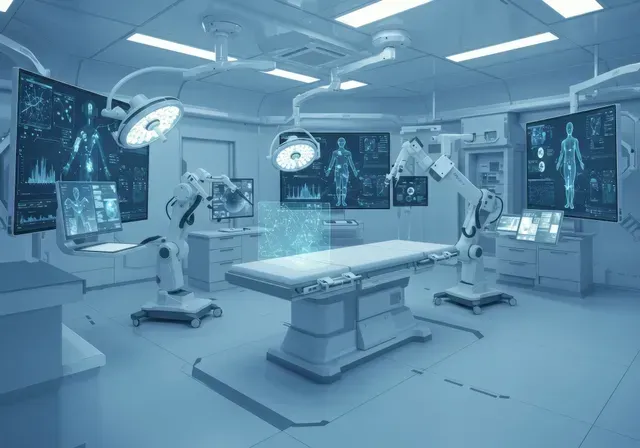
What is Enabling Technology in Spine Surgery?
Enabling technology refers to the advanced tools and systems that enhance a surgeon's ability to operate with greater safety, precision, and efficiency — often through less invasive approaches.
Intraoperative Neuromonitoring (IONM)
Continuously assesses nerve function during surgery to prevent neurological injury.
Intraoperative Navigation (Q Guidance)
Real-time 3D guidance — similar to GPS — for accurate trajectory planning and screw positioning.
Ultrasonic Bone-Cutting Device (Sonopet)
Precise bone sculpting while protecting surrounding soft tissues and nerves.
Robotic-Assisted Surgery (Co-Pilot)
Enhances safety and precision in decompressions and screw placement, allowing smaller incisions and less tissue disruption.
Surgical Microscope
High-powered magnification and illumination that reveal fine neural structures in exceptional detail, allowing delicate work to be performed with maximal safety.
Augmented Reality
Surgical planning and visualization to improve outcomes in complex anatomy.
Benefits to patients
Technology in Service of a Better Recovery
Added Layer of Safety
Continuous neuromonitoring and enhanced visualization provide real-time feedback throughout the procedure.
Minimally Invasive Approaches
Smaller incisions and less muscle disruption, made possible by technologies that let the surgeon see and do more through less.
Greater Precision in Implant Placement
Advanced navigation and robotics reduce the risk of implant malposition — protecting against neurologic injury, adjacent segment disease, and the need for revision surgery.
Smoother Recovery
Less tissue trauma typically means reduced blood loss, less postoperative pain, and an earlier return to normal activity.
Common Procedures Using Enabling Technologies
Anterior Cervical Discectomy and Fusion (ACDF) / Cervical Disc Replacement (CDR)
Microscopic visualization supports complete decompression of the neural elements and precise sizing and placement of the implant.
Robotic-Assisted Spinal Fusion
Real-time navigation guides handheld robotic instruments, allowing screws to be placed with millimeter accuracy through smaller incisions.
Anterior Lumbar Interbody Fusion (ALIF) / Lumbar Disc Replacement (LDR)
Intraoperative imaging and neuromonitoring guide safe access and precise implant positioning via a retroperitoneal approach, performed in collaboration with a dedicated vascular access surgeon.
Complex Revision Surgery
Q Guidance navigation and Co-Pilot robotics provide real-time orientation through distorted anatomy, allowing revision procedures to proceed safely and efficiently.
Minimally Invasive Decompression
Ultrasonic technology cuts bone using high-frequency vibration rather than force — allowing precise removal while the spinal cord and nerves remain protected.
Adult Spinal Deformity Surgery
Preoperative 3D planning, intraoperative navigation, and continuous neuromonitoring support safe correction of complex deformity across multiple spinal levels.

Why Choose Us?
As a board-certified, fellowship-trained orthopedic spine surgeon, Dr. Brandon A. Ortega stays at the forefront of surgical innovation, ensuring that each patient benefits from the safest, most advanced techniques available. Whether you're facing degenerative disc disease, spinal instability, or scoliosis, enabling technologies allow us to tailor a solution that is both precise and personalized to you.
Experience the Most Advanced Spine Care
Schedule a consultation with Brandon A. Ortega, MD — board-certified, fellowship-trained orthopaedic spine surgeon — to discuss a treatment plan built on today's most sophisticated surgical technology.